How to Make Better Coffee at Home With What You Have
- How can you make better coffee at home?
- Clean the brewer you already own
- Build one repeatable baseline
- Fix the variables in a useful order
- Try the three-brew reset
- Read the cup without turning taste into a verdict
- Respect the limits of each brewer
- When is the equipment actually the problem?
- A simple week of better coffee
- Sources
How can you make better coffee at home?
Better coffee starts with a repeatable recipe, not a shopping cart. Clean the brewer, use the freshest coffee you already have, measure coffee and water the same way each time, match the grind to the brewing method, and change only one variable between cups. Most disappointing coffee is easier to diagnose once the morning routine stops changing five things at once.
Start with three brews. Make the first exactly as usual and write down what you did. For the second, adjust the grind by one step if you can. For the third, adjust the coffee dose only if needed. Keep the beans, water, batch size, and brewer constant. That small experiment will tell you more than a new accessory whose main achievement is occupying another patch of counter.
Clean the brewer you already own
Coffee oils, old grounds, and residue can carry yesterday's flavours into today's cup. The National Coffee Association's drip-coffee guidance says to rinse the brew basket and permanent filter after each use, wash the carafe, and follow the machine maker's instructions for cleaning and descaling. It also notes that a buildup of coffee oil can make later cups taste bitter.
Wash removable brew-contact parts as their manual directs. Rinse away detergent fully, and let parts dry before reassembly. Unplug an electric brewer and allow the hot plate and carafe to cool before cleaning. Keep water away from electrical components, and never reach near grinder blades. A cracked glass carafe, damaged cord, or malfunctioning brewer needs the manufacturer's service guidance rather than a workaround.
Descaling and ordinary washing are different jobs. Washing removes coffee residue. Descaling removes mineral buildup inside machines that heat or move water. Use only the method and schedule in the brewer's manual; materials and internal parts differ.
Build one repeatable baseline
Before fixing the cup, make the recipe visible. Record five things:
| Variable | What to write down |
|---|---|
| Coffee | Bag, roast, and whether it is whole bean or pre-ground |
| Dose | Grams, level spoonfuls, or the same scoop filled the same way |
| Water | Grams, millilitres, or one clearly marked vessel |
| Grind | Grinder number or a plain description such as coarse or medium |
| Method and time | Brewer, batch size, and contact or cycle time you can observe |
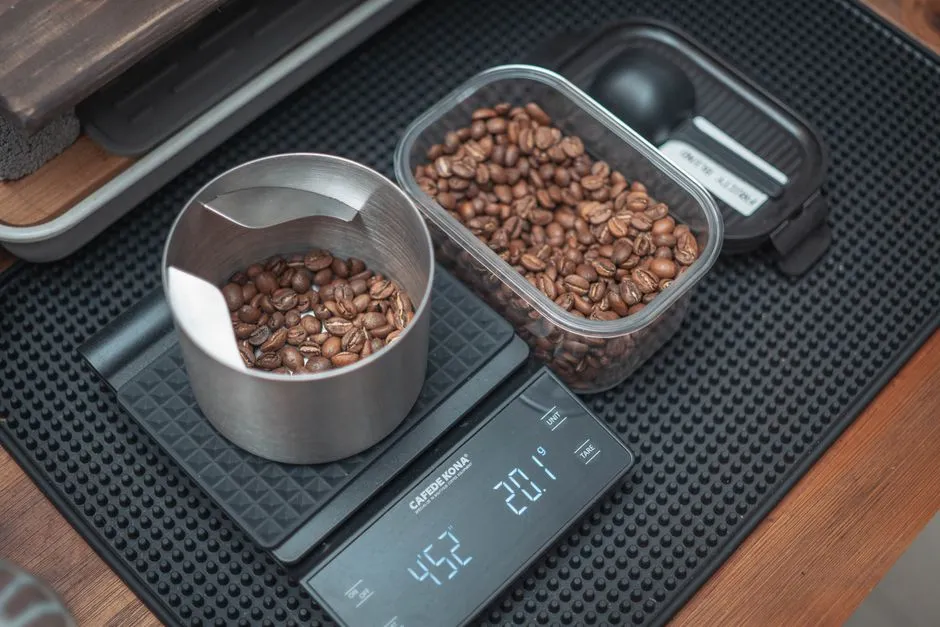
Use a scale if one is already in the kitchen. If not, consistency still beats guesswork: use the same level spoon, the same water vessel or carafe mark, and the same batch size. Do not alternate between a heaped scoop on Monday and a polite little spoonful on Tuesday, then blame the beans for having moods.
Brew the baseline twice before adjusting it. If the two cups differ markedly, the immediate problem is repeatability. Check whether the dose was level, all grounds were wetted, the machine completed its cycle, and the coffee sat in the carafe for the same length of time. Do not chase a flavour until you can reproduce it.
Fix the variables in a useful order
The order below is an editorial troubleshooting sequence, not a universal scientific ranking. It starts with free checks and keeps each change easy to observe.
Use the freshest coffee already in the cupboard
Freshness cannot rescue a poor recipe, but badly stored coffee can flatten a good one. The National Coffee Association's storage guidance recommends protecting roasted coffee from air, moisture, heat, and light. Keep the bag sealed or use an airtight, opaque container you already own, stored in a cool, dark place away from an oven or sunny window.
If you own a grinder, grind only what the brew needs. If you buy pre-ground coffee, close the package promptly. The next time coffee is already on the shopping list, a smaller bag bought more often may suit a slow-drinking household better than a large bag that lingers. That is a purchasing habit, not an instruction to discard usable coffee.
Make the coffee and water measurable
A practical starting point for many hot filter and immersion brews is a 1:16 coffee-to-water ratio by weight. At that ratio, 240 grams of water uses 15 grams of coffee because 240 divided by 16 equals 15. Our coffee-to-water ratio guide has the full chart and scaling formula; this article will not make you read the same table twice.
No scale? Keep the current spoon and water measure, but make both repeatable. Level the coffee rather than heaping it. Fill the water to the same mark. Once that baseline tastes close, small changes become meaningful. A scoop is not a scientific unit, but it can be a consistent household unit.
Match the grind to the method
The same NCA drip guide starts automatic drip at a medium grind, lists pour-over as medium, and French press as coarse. Treat those labels as starting descriptions because grinders do not share a universal numbered scale. If a grinder is available, change only one step at a time. If coffee is being bought anyway, ask the seller to grind it for the brewer you use.
Grind is useful because it changes how quickly water extracts soluble material from coffee. Finer grounds generally expose more surface area; coarser grounds expose less. That does not make finer automatically better. It makes grind an adjustment, not a quality badge.
Check the water without building a chemistry lab
Taste the water plain. If it has a strong chlorine, mineral, or stale taste, the coffee will not hide it. For automatic drip, the NCA recommends cold water, filtered if possible, and advises against distilled or softened water. Keep that advice in its drip context rather than declaring one water suitable for every brewer.
If a household filter is already available, compare one otherwise identical batch with filtered water. If it is not, move on. This guide promises better use of what is in the kitchen, not a scavenger hunt for designer minerals.
Keep temperature and time method-specific
Temperature and contact time affect how quickly extraction happens, but neither has one correct setting for every brewer. Follow the brewer's instructions or a method-specific recipe. Do not apply a French press time to an automatic drip machine or an espresso grind to a pour-over cone.
UC Davis Coffee Center's brewing research summary describes controlled drip studies in which brew strength and extraction yield affected sensory profiles. One study found little sensory effect from temperature alone when researchers adjusted other variables to hold final strength and extraction constant. That was hot drip research, not permission to ignore temperature everywhere. It is a useful reminder that the finished extraction matters more than treating one kettle number as magic.
Try the three-brew reset
Use the same coffee, water source, brewer, and batch size for all three.
| Brew | Keep constant | Change | What you learn |
|---|---|---|---|
| 1: baseline | Current routine | Nothing | Whether you can describe and repeat the present cup |
| 2: extraction test | Coffee dose and water amount | One grind step; if grind is fixed, one permitted time adjustment in a manual brewer | Whether a small extraction change moves the cup in a useful direction |
| 3: strength test | Best grind or time from brew 2 | Coffee dose only | Whether the cup needs more or less concentration |
For brew two, go one step finer if the baseline seems unpleasantly thin or sharply sour. Go one step coarser if it seems harsh, drying, or aggressively bitter. These are tests, not diagnoses. Roast, water, bean character, brew geometry, and cleanliness can produce overlapping sensations. If the adjustment makes the cup worse, return to the baseline.
For brew three, keep the better grind and alter only the coffee amount. With a scale, a five-percent test is easy to recompute: a 30-gram dose becomes 31.5 grams for a stronger trial or 28.5 grams for a lighter one. Without a scale, add or remove one level teaspoon from the recorded baseline.
The Specialty Coffee Association's overview of dialing in explains that changing brewing parameters changes brew strength, extraction yield, and flavour. The three-brew sequence above is our practical way to isolate those changes at home. It is not an SCA protocol or a validated rating test.
Read the cup without turning taste into a verdict
Taste words are clues. They are not fault codes.
- Thin or flat: First confirm the recipe repeated correctly. Then test a slightly finer grind or a little more coffee, one at a time.
- Sharply sour: Some coffees are naturally bright or fruit-forward. If the sharpness is unpleasant, test one finer grind step or, in a manual method, slightly more contact time.
- Harsh, drying, or bitter: Dark roasting can contribute bitterness. If the bitterness seems brew-related, test one coarser grind step or slightly less contact time in a manual method.
- Muddy or silty: Check filter fit and grind consistency. A French press naturally passes more fine sediment than paper-filtered drip coffee, so compare the cup with what the method is designed to produce.
- Stale or cardboard-like: Recheck storage, the age of the opened coffee, and whether old residue remains in the brewer.
Modern coffee research is a good reason to resist tidy slogans. UC Davis researchers found that consumer preferences spread across different brew strengths and extraction yields, while sourness and bitterness varied with more than one measured condition. “Balanced” is not one point that every drinker must enjoy. The goal is a cup you prefer and can repeat.
Respect the limits of each brewer
An automatic drip machine controls flow and much of the timing, so the easiest home adjustments are cleanliness, coffee dose, water, and grind. A manual pour-over gives the brewer more control, which also creates more ways for one cup to differ from the next. Keep the pouring routine steady while testing grind or dose.
A French press gives direct control over dose, grind, water, and steep time. If that is your brewer, use our French press method rather than importing a generic time from this guide. Espresso, moka pot, and cold brew have their own pressure, concentration, or time requirements. A single fix cannot honestly cover all of them.
When is the equipment actually the problem?
Consider gear only after a clean, repeatable routine still exposes a specific limitation. A grinder may be the constraint if it cannot repeat a setting or produce a grind suitable for the method. A brewer may be the constraint if it leaks, fails to complete its cycle, or no longer operates according to its manual. Damaged electrical equipment, cracked glass, and faulty pressure brewers should not be used.
A new tool should solve a named problem. “My dose changes because I cannot measure it” is a problem. “The internet owns a shinier kettle” is not. If the existing setup can deliver a repeatable cup you enjoy, it has already passed the only useful test.
A simple week of better coffee
On day one, clean the brewer and make two baseline cups. On the next brewing day, run the grind or manual-time test. On the third, test the dose. Keep the better setting after each comparison, and do not change beans halfway through unless the bag runs out.
At the end of the week, write the winning recipe in one line and keep it by the coffee. Next week, adjust only if the cup asks for it. Good coffee at home is not a permanent renovation project. It is a short recipe that still makes sense before breakfast.
Sources
- National Coffee Association: Drip Coffee, accessed 3 September 2026. Supports drip-specific grind, water, cleaning, maintenance, and equipment-safety guidance.
- National Coffee Association: Storage and Shelf Life, accessed 3 September 2026. Supports protection from air, moisture, heat, and light, plus airtight storage and grinding near brew time.
- UC Davis Coffee Center: Publications, accessed 3 September 2026. Supports the limited hot-drip findings on brew strength, extraction yield, temperature, and consumer preference.
- Specialty Coffee Association: Coffee Decoded, accessed 3 September 2026. Supports the relationship between brewing parameters, strength, extraction, and flavour.